Most Ocean City sellers prepare for one inspection before closing: the smoke detector and carbon monoxide check that New Jersey requires statewide. They schedule it, a city employee walks through, checks the hallway alarms and the fire extinguisher bracket near the kitchen, and moves on. What surprises a lot of sellers, sometimes with only weeks left before a scheduled closing, is that Ocean City runs a second inspection that has nothing to do with smoke or carbon monoxide. It has to do with whether the house, as it actually exists today, matches the house the city approved on paper.
That second inspection is called a Zoning Compliance Certificate, and under Ocean City's municipal code, it is required before title can transfer on nearly every residential sale in the city. The seller is the one responsible for obtaining it, the Department of Community Development is the office that issues it, and the inspection looks for something a lot more consequential than a missing 9-volt battery: whether any space in the house has moved from nonhabitable to habitable without the paperwork to back it up.
What the Smoke Detector Story Leaves Out
If you've sold a house anywhere else in South Jersey, you may already know that New Jersey doesn't mandate a resale Certificate of Occupancy statewide. Whether a town requires one, and what it checks, is a local decision. Plenty of shore towns keep it simple and stick to a smoke and CO detector certificate, confirming the basics are in place and calling it done.
Ocean City doesn't stop there. Its ordinance treats the sale of a home as a trigger for a full zoning-use review, the same kind of scrutiny that would apply if you were pulling a permit for an addition. The Department of Community Development inspects the residential dwelling, on appointment, during business hours, and checks whether the current use was permitted under the zoning regulations in effect when the house was built, and whether any part of the structure has substantially changed from nonhabitable to habitable space compared with the plans on file for the original Certificate of Occupancy.
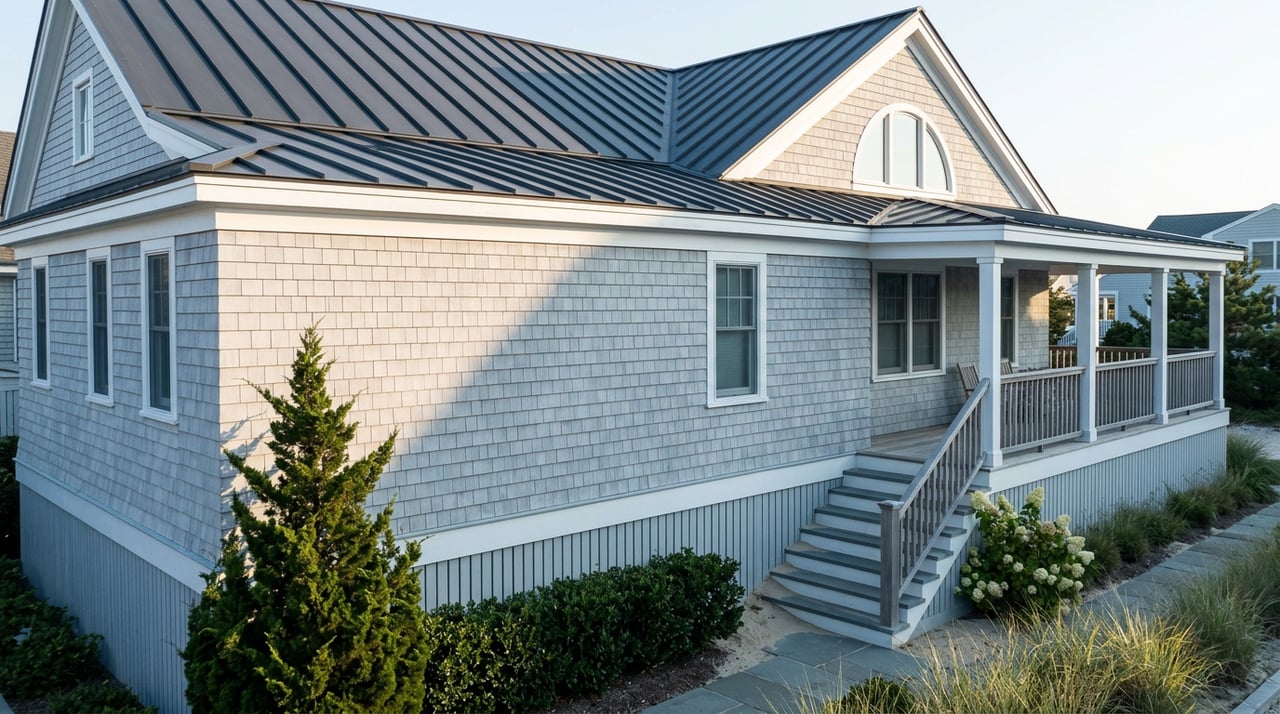
That second part is where a lot of Ocean City sellers get an unwelcome education. An enclosed porch. A finished basement. An attic converted into a bedroom, a bonus room over a garage, a ground-level storage area turned into a den. On a barrier island where houses have been passed down, added onto, and quietly upgraded over decades, these are common projects. They are also exactly what the zoning compliance review is built to catch.
The Line That Changes Who Gets Scrutinized
Here's the detail that flips the intuition most sellers walk in with. The ordinance includes a carve-out: any residential dwelling that received its Certificate of Occupancy before January 1, 1996 is presumed to have already met the requirements for a Zoning Compliance Certificate. The city, or anyone challenging that presumption, has to show by clear and convincing evidence that the certificate shouldn't be issued.
In practice, that means a house built or last certified before 1996, even one that looks dated, even one with an obviously finished basement nobody ever filed paperwork for, starts the resale process with the legal benefit of the doubt. A house built or substantially renovated after that date doesn't get that presumption. Its current condition gets compared directly against whatever plans are on file, and if the finished attic or the converted garage isn't on those plans, the inspector has grounds to flag it.
That's the part of this story that a median price or a square footage number can't tell you. The paperwork risk in an Ocean City sale doesn't track neatly with the age or condition of the house. A meticulously renovated 2016 build can carry more zoning exposure at resale than an untouched 1980s cottage, simply because of when the original Certificate of Occupancy was issued and what got built after it.
Why This Keeps Surfacing on Older Bungalows With New Additions
Ocean City's housing stock leans heavily on classic shore bungalows and cottages, many of them owned by the same family for generations, with additions and finish-outs layered on over the years as budgets and needs allowed. That's exactly the profile most likely to run into the nonhabitable-to-habitable question at resale, especially when:
- An enclosed porch was converted to year-round living space after the original CO was issued
- A basement or ground-level storage area was finished into a den, guest room, or in-law suite
- An attic or half-story was built out with a bedroom or bath that wasn't on the original plans
- A garage was converted to living space without a corresponding zoning permit
None of this means the work was done badly. It means the paperwork trail may not exist, and Ocean City's process is built specifically to look for that gap before a deed changes hands.
The Construction Code Office at 115 East 12th Street puts it plainly on its own site: work done without permits typically surfaces during a home inspection or a disclosure prior to a property transaction, and sometimes from a call placed by a neighbor. The zoning compliance review is the formal version of that same exposure, built directly into the closing timeline instead of left to chance.
What It Actually Costs You in Time and Money
The mechanics are more forgiving than the stakes might suggest. Once the Department of Community Development inspects the property, it has to notify the seller of the result within three business days, and if the certificate is warranted, it has to be issued within that same three-day window. The inspection itself can often be scheduled at the same time as the smoke detector inspection, so it doesn't necessarily add a separate appointment to your calendar.
Where it gets more expensive is when the first inspection doesn't go cleanly. A failed first inspection that requires a follow-up visit triggers reinspection fees under the city's fee schedule, and a missed appointment counts as a failure to comply, with its own additional fee attached. None of these numbers are the kind of thing that sinks a deal on their own. What sinks a deal, or at least a closing date, is discovering three weeks out that the finished lower level everyone assumed was fine actually needs to go back through a zoning permit process before the certificate can be issued.
Getting Ahead of It Before You List
The fix here isn't complicated, it's just something that has to happen earlier than most sellers expect. Before you put an Ocean City property on the market:
- Pull the property's permit history from the Construction Code Office and compare it against what's actually built, room by room.
- If your Certificate of Occupancy predates January 1, 1996, confirm that date in writing, since it changes the legal posture of your review.
- If any space was finished, enclosed, or converted after that date without a matching permit, talk to the Zoning Officer before you're under contract, not after.
- Build the Zoning Compliance Certificate application into your pre-listing timeline the same way you'd schedule a home inspection, rather than waiting for your buyer's attorney to ask about it.
A seller who does this in June is negotiating from a position of knowledge. A seller who finds out in September, with a closing date already on the calendar, is negotiating from a position of catch-up, and often absorbing a delay or a price concession that a little advance work would have avoided entirely.
FAQ
Does every Ocean City home need a Zoning Compliance Certificate to sell? The ordinance applies broadly to residential dwelling units, including one-family, two-family, three-family, and multi-family properties, along with individual condo and co-op units, prior to any transfer of title.
Does the pre-1996 presumption mean I can skip the inspection entirely? No. The presumption shifts the burden of proof in the homeowner's favor, it doesn't eliminate the requirement to obtain the certificate before title transfers.
Can this certificate be handled at the same appointment as my smoke detector inspection? Often, yes. The ordinance allows the Zoning Compliance Certificate inspection to be conducted alongside the smoke detector inspection, which is worth confirming when you schedule.
Selling a shore property in Ocean City comes with more moving pieces than a mainland closing, and the zoning compliance step is exactly the kind of detail that rewards a seller who plans early over one who reacts late. If you're weighing a sale, or trying to understand what a past renovation might mean for your timeline, Dorothy Phillips has spent decades walking Jersey Shore sellers through exactly this kind of local mechanics, block by block and permit by permit. Reach out for a home valuation and a straight read on what your property's history means for your path to closing.